Invasive plants grown in many Australian homes are a threat to the country's environment and biodiversity. Dr Carol Booth from the Invasive Species Council says escaped garden plants threaten Australia's unique fauna and flora.
"Australia has a Massive Weed Problem, and it's been estimated that three-quarters come from Escaped Garden Plants"
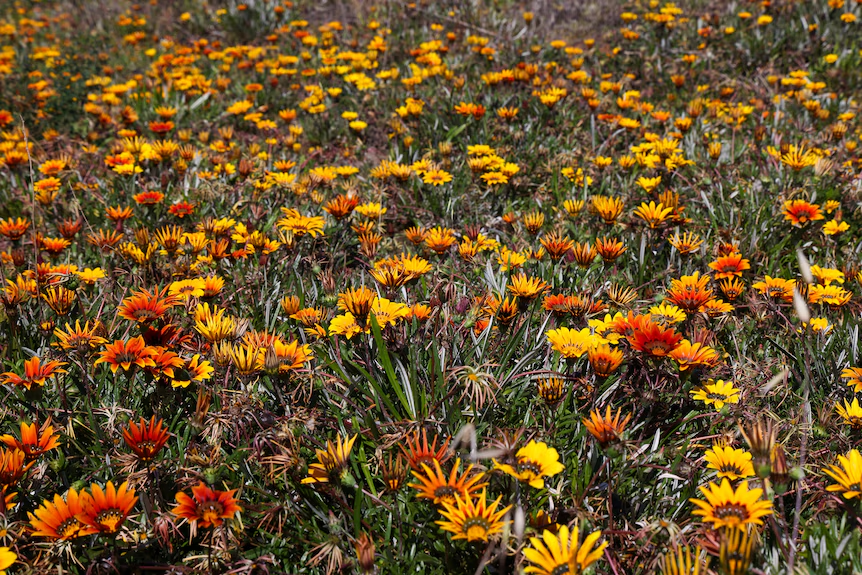
Gazanias are one of the Most Invasive Plants causing Havoc to Agricultural Land and Native Vegetation in Australia.
YES! Gazanias Surprisingly The Worst Of Invasive Weeds In Australia - Extremely Hard To Remove and The Farmers Nightmare!
I wish people would leave their Beloved Plants Overseas when they Come Here, because those Plants often Behave Differently Here than they do in their Countries. My Instincts have told me this strongly for some time, and part of this Article proves it True. Read on......
So how can you plant a sustainable, environmentally friendly garden that won't cause you future headaches?
But there are thousands of other weeds in Australia which aren't illegal to sell or grow. It just depends on where you live.
Horticulturalist Marg Allan works at the Victorian Indigenous Nurseries Co-op (VINC) in Melbourne/Naarm.
So how can you plant a sustainable, environmentally friendly garden that won't cause you future headaches?
This is what horticulture experts recommend.
She says most invasive plants which become garden escapees are chosen because they are hardy, drought-tolerant and quick growing.
"Agapanthus is a favourite nasty," she says.
"It does look pretty en masse up your driveway, but it's known especially in wetter areas like the Mornington Peninsula to Escape from people's properties."
Ms Allan recommends checking your local council's weed list, Gardens for Wildlife programs and speaking to professional nursery staff.
"It's an exciting opportunity for people to connect with nature and learn about their local area," says horticulturalist Alex Nosek, who works alongside Ms Allan at VINC.
"Home gardeners have an important role in supporting local insects and wildlife," he says.
Here's what she recommends you grow instead of the more popular invasive plants:
Invasive plants/ environmental weeds (in some states)
Recommended plants to grow instead
Agapanthus
blue flax lilies (Dianella species)
Foxglove
snapdragons, delphiniums, white correa
Morning glory / English ivy
purple coral pea, wonga vine, native clematis species
Gazania
paper daisies
Invasive Plants Impact Your Garden
While invasive plants are a threat to Australia's unique environment and biodiversity, they can also damage your backyard or apartment.
"If their roots are highly invasive, they might invade your sewerage pipes or get into the foundations. Certainly bamboos are known to do that," Dr Booth says.
University of Melbourne lecturer of urban horticulture Dr Jela Ivankovic-Waters says invasive plants outcompete other plants for resources like water, nutrients and light. In some instances, they kill off other species.
Using climbing plants as an example, she explains how they utilise their small tendrils to hook onto and wrap themselves around a fence, stem or branch of another plant, spreading quickly.
"Morning glory (Ipomoea), for instance, has a lot of problems shading out light, choking and suffocating plants that might be growing underneath it," she says.
It's one of the reasons Dr Ivankovic-Waters says growing native plants shouldn't be seen as an alternative but rather the optimal choice.
How To Plant A Sustainable Garden
Growing native and indigenous plants in your backyard benefits local wildlife, biodiversity, the environment and even your hip pocket.
More Gardening Tips Many species require less water and some no fertilisers or pesticides, which means there are less costs involved.
Fiona Cross, horticulturalist at Nillumbik Shire's Edendale nursery in Melbourne's north-east, says it's also important to understand the difference between native and indigenous plants.
While native plants can be from anywhere in Australia, indigenous plants are naturally found in a local area.
"We grow plants that are found in the wild in the bush in Nillumbik, so they'll be more suited to the area and often less likely to be invasive," she says, adding that native plants can also be invasive in the wrong environment.
Indigenous plants also adapt well to local soils and climate conditions, while enhancing wildlife corridors, she says.
"Having a diverse range of indigenous plants can attract a whole range of different insects, to your garden."
Ms Allan says whether you're growing plants in pots in an apartment or a home garden, there are various indigenous species that benefit the ecosystem.
Golden Everlasting Daisies are a plant that Brightens up a Balcony and Attracts Pollinators, she says.
"Smaller flowers that attract bees, moths and butterflies are Important Ecologically."
A spokesperson for the Department of Climate Change, Energy, the Environment and Water says the Australian government recognises the Serious Threat posed by Invasive Plants, including Escaped Garden Plants, to the nation's Unique Native Plants and animals.
The government is developing a threat abatement plan in collaboration with state and territory governments.
"It will provide a national framework to reduce the impact of these weeds on Native Species and Ecosystems," they say in a statement.
"The plan will set out a range of tools to address the threat, which may include regulation."
Janets Comments I strongly disagree with that statement. As most of us know full well "Albanese and his Crew are GREAT PRETENDERS" a Useless Force when it comes to getting THE IMPORTANT THINGS Done!!!
Back Pauline Hanson and One Nation the best you can Folks. That Wicked Albanese Government have ALL but Destroyed This Country (they've destroyed so much of Our Peace and Safety, Our Values and Wealth) I've Never been a "Party Voter" and have Always Voted for Independents. Last time, I backed Peter Dutton - to get Albanese Out, only to find his own Party didn't back him. As the new adage says "I don't trust Labour OR Liberal" and "Pauline and Barnaby ARE Our Best Hope" they're Far More Genuine. The Major Parties have been Giving us Headaches ever since I was Voting Age. Lets Show them We Mean Business and Take Our Country Back!
Bright and colourful gazanias are popular at many Australian nurseries, but farmers, environmental groups and researchers are calling for government regulation to ban the sale of what is also an invasive weed with the potential to cause real damage to agriculture.
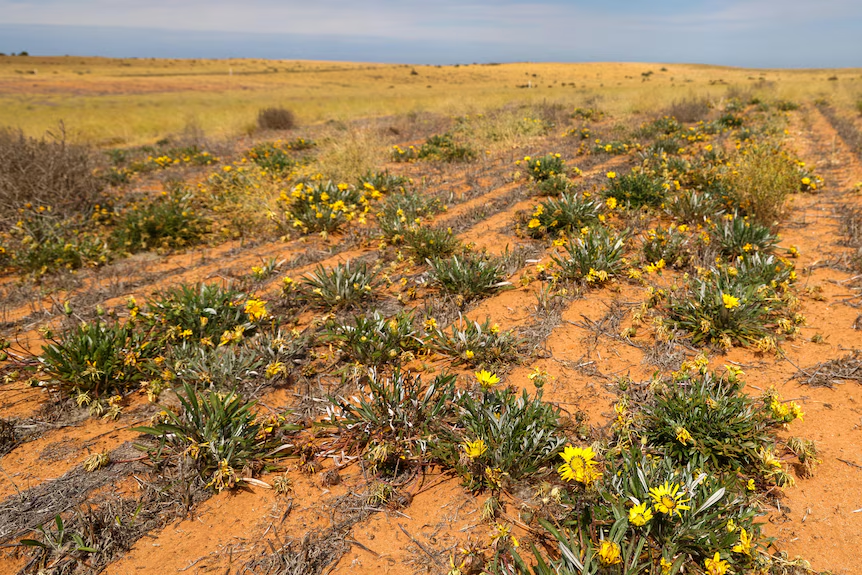
They are not only overrunning roadsides, native grasslands and coastlines but have also invaded paddocks in South Australia, Victoria and parts of Western Australia, making productive farmland unviable and causing significant economic losses.
In paddocks where Loxton farmer Robin Schaefer would usually grow lentils or other legumes, gazanias have taken over.
"They just exploded. Gazanias take over the environment, and nothing else will grow around the plants," Mr Schaefer said.
"A weed of this significance shouldn't be allowed to be sold in Australia."
Dr Bajwa said gazania could acclimatise to the harsh, hot and dry Australian climate, making management "extremely difficult".
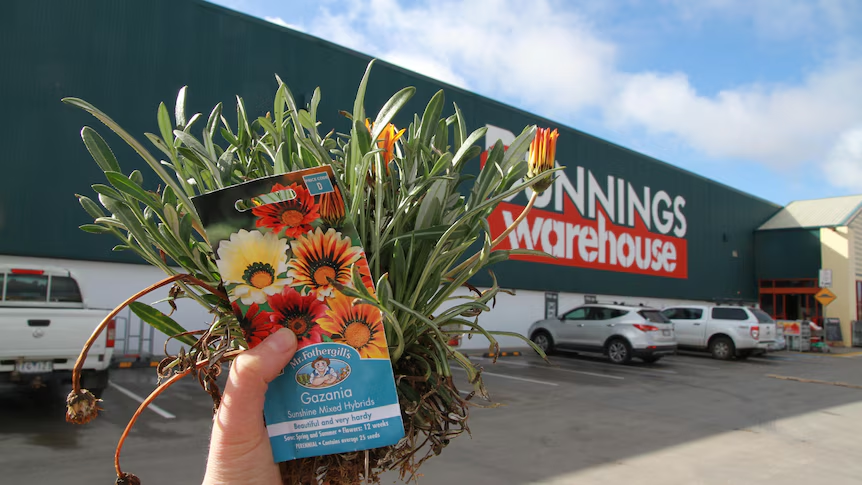
Mr Walladge, who previously operated a native plant nursery in the Riverland, called the sale of gazanias at plant stores "insanity".
"Selling effectively a Noxious Weed is just bonkers" he said.
Weeds and Invasive Species, including Gazanias, are estimated to cost Australia's Agriculture Sector more than $5 Billion annually. Needless to say we don't need Any More Gazanias.
As for the Governor General, let her go back to England and have her "Tea Parties" with the Royals. She has certainly proven herself to be Useless in Helping us in the worst Plight we've had in Our History (all the Destruction the Wretched Albanese Government has brought on Our Once Wonderful Country)
You sound Livid Janet? "Yes I Am!" like most decent people Are!
Who would have ever guessed the Popular Gazanias could be So Destructive? I've seen Worse photos than this! Who needs a LAZY Incompetent Party-Loving PM? Of him and his Crew the adage rings true "Promises were made to be Broken!"
And be it Known that Bunnings have been VERY RESISTENT to Professional Requests to Remove Gazanias from their Range - after being Informed about the Massive Damage they do - they flatly Refused. We should All Inundate their Corporate Number with Complaint Calls. Yes indeed we should!
Profit Comes First and Always with Bunnings - You Can Be Sure of That. Their Staff are Friendly but the Company is Aggressive. They have driven our Mitre10 and Home Hardware Stores almost out of Existence in the Suburbs - that is NOT Fair Trading Practice and should Not be allowed in Australia.
At this stage, South Australia is the one State who have Banned the Sales of Gazanias. Other States need to Follow. Some Ebay Stores gave a bad "No Response" when I made an Appeal to them and Bunnings is the Main Offender. For your convenience, if you would like to do something about this, I will place Contact Details for you here for their Corporate Offices:
National Support Centre and VIC, TAS and NT
(03) 8831 9777 New South Wales and ACT (02) 9846 7100 Queensland (07) 3452 5600 Western Australia (08) 9365 1555
I suggest we could phone more than one Office AND we could make Regular Calls till we get some Action on this. It only takes a few minutes to make our Concerns and Objections known. Ask for Complaints and say something like "Concerning your Sales of Gazanias, I/We are not happy that you are putting Our Australian Landscape at Risk AND Our Farmers' Crops who Grow Our Food. You are potentially Threatening their Work and Income AND Our Food Supply if this Continues." Or you could say something like "I/We heard that you were approached by Environmentalists to Remove Gazanias from your Range, and you refused, saying you will Continue to Sell in the Interest of Your Customers. This is Not in Our Interest that you are Selling Plants and Seeds for Plants that can be a Problem in Our Garden, Our Area and Our Farmers Crops. This must Stop. I/We want Action on this!"
AND We can also make known our Concern and Displeasure on Google Reviews. For your convenience, I am placing Links here for the Google Page for Each State who are Not Cooperating, due to State Laws not being Imposed on them. They are as follows:
Bunnings Regional Support Office Victoria is HERE Bunnings Support Office NSW is HERE Bunnings Regional Support Office Queensland is HERE Bunnings Regional Support Office Western Australia is HERE
Find me there on Google Reviews, I will choose 2 heavily Infected States (Victoria and Western Australia) to Express my Displeasure in Bunnings Stance on this! I'd appreciate it if Customers in Queensland and New South Wales do this to Protect Your States as well, Hey? Come and join me. Please Go for it!
I encourage you to Act without delay on this because there are so many things to keep us busy and distract us if we have good intentions "Yes, I will do that!" and forget. Our Farmers AND Their Food Supply are Counting on Us. They've had such a Hard Time with Other Concerns: Floods, Droughts, Fuel Crises, Fertiliser Shortage, Awful Windfarm Threats which Affect their Land AND Nervous System terribly, some Governments are Imposing on them - Violating their Ownership Rights, against their Interests and their Will. They do Not need this Horrendous GAZANIA WEEDS Problem as well. No wonder so many Confrontations of these Elements are now causing Many Farmers to Leave the Land. According to ChatGPT about 7% of these Precious Farmers Leave each Year at present. That's a lot of Lost Farms, can you blame them? How long would You stay against such Pressures? Not me, to be honest. See why we must Help them?
Bunnings is a Big Citified Corporation. They know nothing about a Farmer's Life, much less appreciate their Plight. Just to think they didn't Care to make things a little Easier for them is Very Concerning. It shows them up in their true colours - not the Nice Friendly Company they Profess to be. Hey?
Through the years, there has been such disregard for Farmers - we buy most our Groceries in Fancy Packets and Produce from Modern Supermarkets, forgetting Our FARMERS WHO FEED US - they somehow don't come to mind. I was brought up close to a Dairyman and barley Crops across the road from us and Eggs from the neighbours, in a small Country Beach Town for 14 years before living North-East of the City.
My mother used to take me with her when she did Grape Picking and Pea Picking sometimes. She sat me under the shade of a Vine while she worked, and I watched the activity of the women Picking and filling Carts nearby. Farmers are wonderful people who do "an honest day's work" and come into their House early each evening to refresh and share a mealtime with their Family around them and relax for the evening. Watching their Kids play in the Sunshine etc on Weekends, have Get Togethers with neighbours, and go for an occasional drive, whatever. Yes, it used to be a wonderful way to live before Today's Challenges. So please have Compassion and Back Them because they are Part of our Lives more than you think. Though we don't see them, we have their produce on our table each day. We like to think of them or acknowledge them often when we thank Jesus for our meals.