

By Janet Vargas - Owner of this Website
With Guided and Selected AI Assistance
I Research Healthy Gardening Often
Supercharge Your Soil for Continuous, High-Yield Harvesting
To achieve massive, year-round grocery savings on limited space, you cannot rely on dead, sterile soil. High-yielding greens like Swiss chard and prolific herbs drain nutrients rapidly from the earth. To keep your backyard grocery store producing indefinitely without replacing your soil every season, you must feed the soil biology.
By using targeted, food-safe organic fertilizers, natural mineral conditioners, and sub-surface composting, you create a nutrient-dense ecosystem that maximizes plant immunity, crop yield, and the ultimate nutritional value of your food.
The Complete Organic Feeding Loop:
[Munash Rockdust + GroLife] ──> [In-Ground Terracotta Worms] ──> [Seasol] ──> [Richgro P/K] ──> [NutriField BudBurst]
 (Mineral Foundation)            (Continuous Live Castings)     (Root Health)  (Fruiting/Structure)  (Explosive Growth)
A Crucial Warning: Do Not Double Up on Nutrients
This guide is designed as a menu of premium options, not a mandatory shopping list. You do not need to buy every single product listed below to achieve a high-yielding garden.
In organic gardening, more is not always better. Never double up on products that perform the exact same function. For example, applying two separate high-potassium products simultaneously creates a nutrient imbalance that can lock out magnesium and calcium, stunt plant growth, and waste your hard-earned money. Choose one foundational mineralizer, one slow-release macro-nutrient, and one liquid accelerator that fits your immediate budget and goals.
1. Foundational Mineralizers & Soil Structural Conditioners
These products act as the long-term backbone of your soil. They work slowly but surely, releasing minerals over months and permanently improving soil architecture.
- Horticultural Charcoal: An absolute game-changer for raised beds and small planters. It acts like a highly porous, microscopic sponge that permanently sits in your soil. It absorbs and holds onto water and liquid nutrients (like Seasol), preventing them from washing out of the bottom of your planters. It also provides a permanent, safe shelter for beneficial soil microbes to colonize.
- GroLifeThis comprehensive soil conditioner acts as a biological activator. It delivers a balanced spectrum of essential nutrients and trace elements that stimulate natural soil microbes, waking up tired dirt and unlocking trapped nutrients for your plants.
- Munash Organic Rockdust Sourced from natural volcanic rock, this slow-release mineralizer deposits up to 100 minerals and trace elements back into your raised beds. This creates "living soil," making your chard, lettuce, and herbs incredibly nutrient-dense while dramatically improving their natural flavor.
2. The Living Bio-Engine: In-Ground Terracotta Composting
This biological option works continuously and automatically, providing a steady, gentle stream of highly bio-available nutrition.
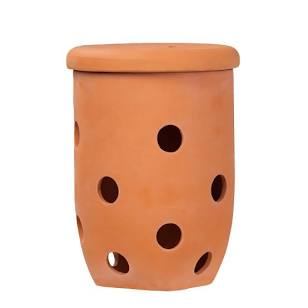
Backyard Farmer 1.1L Archie In-Ground Terracotta Worm Farm $20.75
Bunnings Warehouse& more
Perfect for smaller planters, compact vertical bed bases, or targeted areas within your herb troughs.
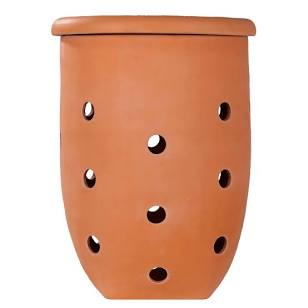
Backyard Farmer 6.5L Archie In-Ground Terracotta Worm Farm $41.55
Bunnings Warehouse& more
Ideal for larger, high-output corrugated steel or timber raised beds.
Why Terracotta Beats Plastic for Your "Wigglies"
Standard plastic worm stands isolate worms from their natural habitat, exposing them to extreme temperature fluctuations that frequently cause colony die-offs. 100% breathable terracotta acts as a natural thermal buffer, insulating the worms from harsh Australian summer heat.
Built with targeted side openings, these units allow composting worms to move freely between the farm and your garden bed. They eat your kitchen scraps inside the unit, then migrate out into the surrounding soil to deposit fresh, nutrient-rich castings and aerate your plants' root zones naturally. It is also an exciting, safe way for kids to carefully participate in gardening alongside their parents.
3. Targeted Growth & Yield Adjusters
These macronutrient supplements work moderately fast, responding over a few weeks to strengthen plant tissues and support heavy cropping.
- Richgro Phosphorus: This organic additive focuses purely on strong, healthy root systems and early plant development. A solid root system ensures your plants can efficiently drink up water and minerals from your raised beds.
- Richgro Potash (Potassium): Potash regulates water retention and strengthens cellular walls. It makes your plants highly resistant to pests and disease, while ensuring your herbs produce thick, lush foliage rather than turning thin and woody.
4. Rapid Liquid Accelerators
These liquid formulas work incredibly quickly, absorbing through both the roots and leaves to deliver a visible boost to your plants within days.
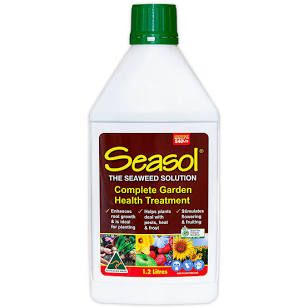
Seasol $15.86 Bunnings Warehouse& more
A 100% natural liquid seaweed plant tonic. It acts as a health booster for your garden by stimulating explosive root growth, increasing microbial activity, and building extreme resilience against heat, drought, and light frosts.
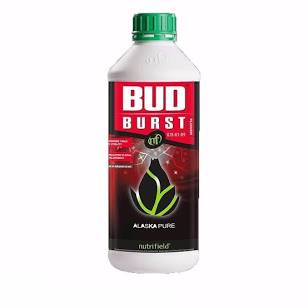
NutriField BudBurst $30.00 Green Genius& more
An Organic Kelp-Based Formulation packed with naturally occurring plant growth regulators, vitamins, and amino acids. It optimizes the plant’s internal metabolic pathways, driving rapid vegetative growth so your "cut-and-come-again" salad greens recover and regrow significantly faster after you harvest them for dinner.
Quick Reference: Choosing Your Garden Pace
- For Instant Results (Quick Fixes): Use liquid drenches like Seasol or NutriField BudBurst to instantly perk up yellowing leaves or help plants recover from a hot Aussie summer afternoon.
- For Long-Term Success (Set-and-Forget): Incorporate Horticultural Charcoal, Munash Rockdust. These choices build sustainable soil health over time, meaning you will need fewer quick-fix liquid products in the future.
- For Sustained Soil Building (Steady Investment): Mix in Horticultural Charcoal or Munash Rockdust during bed setup to permanently upgrade your soil architecture and mineral baseline over time.
- For Active, Daily Living Nutrition (The Commitment Choice): Install an Archie Worm Farm. This is not a "set-and-forget" system; it requires genuine commitment. You or the kids will need to check on your worms every day to every few days to ensure they have the right amount of food scraps, are not being overfed, and that their soil remains damp and cool. The reward for your regular care is a continuous supply of the highest-grade fertilizer on earth.
FEEDING YOUR WIGGLIES CORRECTLY and KEEPING THEM HAPPY!
Managing an In-Ground Worm Farm is all about maintaining the balance between Nitrogen-Rich "Greens" and Carbon-Rich "Browns," exactly like a Miniature Lasagna. Cutting food small accelerates their breakdown, while omitting fruit scraps is a brilliant tactical move to keep ants, fruit flies, and vinegar flies out of your raised garden beds. Other Worm Farms on Plastic Stands and Not a good idea. The Worms often Die because the conditions are Not right for them. OK?
The 1.1 L Archie is designed for about 250 composting worms, while the 6.5 L version takes about 500 composting worms. Both are porous terracotta and are designed to be buried in the garden so the worms can move through the side openings and feed the surrounding soil with their castings.
Here is the practical "Wigglies' Menu & Housekeeping Guide" I would use for your Archie:
The Archie Wriggler Feeding Guide
The golden rule: small amounts, finely chopped, and don't bury fresh food in one enormous lump.
GOOD FOODS — Their Regular Menu
(Select from)
Give them a mixture of:
- Cucumber
- Carrot — grated or finely chopped
- Lettuce and leafy greens
- Broccoli and broccoli stems
- Cabbage
- Silverbeet / spinach
- Tomato — small quantities
- Capsicum
- Potato and potato peelings — small amount
Soft, wet vegetable scraps are particularly useful because they provide both food and moisture.
For tougher vegetables, chopping them quite small makes a substantial difference. You can even freeze scraps and thaw them first; this breaks down the cell structure and makes them easier for the worms and microorganisms to process.
OTHER THINGS THEY LIKE
Small amounts of:
- Plain, Unbleached Cardboard
Crushed Eggshells (Small Amount Only - Rinse First)
Things I would NOT feed the Wigglies
I'd keep these out of your little Archie:
Definitely Avoid:
- Lots of onion
- Lots of garlic
- Hot chillies
- Citrus of Any Kind
- Meats or Protein of Any Kind
- Fats/Oil or Cakes, Biscuits, Pastry etc
The important thing is not making unsuitable foods a part of their diet.
Your "Lasagne" Method
Yes — this is the part you remembered correctly.
I'd make their food something like a little lasagne:
BOTTOM
Moist cardboard
↓Thin layer of finely chopped vegetable scraps
↓ Another layer of torn/moistened cardboard
↓ Another small layer of scraps
↓ Cardboard
↓Another small food layer
TOP
Then put the lid/terracotta cover back on.
The important bit:
Don't make the food layers thick.
You're much better off giving them a thin layer and allowing them to work through it than filling Archie with a big pile of scraps.
When you can still see substantial uneaten food from the previous feeding, don't add more food yet.
That's probably the most useful rule of all:
Feed the worms, not the bin.
Damp — but NOT wet
Yes, you remembered that correctly too.
You want the bedding to feel approximately like a well-squeezed sponge.
If you pick up a handful:
- Damp = good
- A couple of drops when squeezed = fine
- Water running out = too wet
- Dry cardboard/crispy bedding = too dry
And because Archie is terracotta, it has an advantage here: the porous material helps regulate moisture and aeration. That's one of the reasons Backyard Farmer designed it this way.
I would not automatically pour lots of water into it on a schedule. Check it first. The worms need moisture, but they also need oxygen.
How Often Should You Feed Them?
For your 1.1 L Archie with ~250 worms, I'd start conservatively:
New setup
Once a week, a small amount.
Give them time to establish themselves.
Once they're thriving
You can move towards 2 small feeds per week, depending on how rapidly they're consuming it.
But don't use the calendar as the deciding factor.
Instead:
Look at the food.
If most of the previous food has disappeared → feed again.
If there's still plenty sitting there → wait.
That's especially important because a little 1.1 L system can be overwhelmed surprisingly easily.
The new 6.5 L Archie has substantially more capacity and is specified for around 500 composting worms, so you can ultimately give it considerably more food — but I'd still use the same "feed according to consumption" principle.
Where Archie Lives Matters
Because you're using an in-ground terracotta system, I'd give it a position with good shade, particularly through Adelaide's hot weather.
The surrounding soil helps buffer temperature, while the terracotta itself helps insulate and regulate moisture.
Keep the top covered so that:
- it stays moist,
- rain doesn't flood it,
- animals don't get in,
- and the worms aren't exposed to excessive heat/light.
Bunnings' own in-ground worm-farm guidance similarly recommends covering the farm to retain moisture and keep animals out.
And one REALLY important thing about Archie
You don't have to harvest the worms or castings like you would with a conventional multi-tray worm farm.
That's the clever part.
The Archie is buried in the garden, and the composting worms can move through its side openings. They process the scraps inside and the resulting nutrients/castings move into the surrounding soil. That's exactly what the product is designed to do.
So essentially:
Kitchen scraps → Wigglies → Castings → Garden Soil → Happy Plants 🌱
And yes — the 6.5 L Archie is now listed at Bunnings as well.
Backyard Farmer 1.1 L Archie at Bunnings
Backyard Farmer 6.5 L Archie at Bunnings
Backyard Farmer — Archie 6.5 L product page
"Now Have Some Fun!"
All the best as you start considering how you can Start a Herb and Veggie Garden OR Patch:)